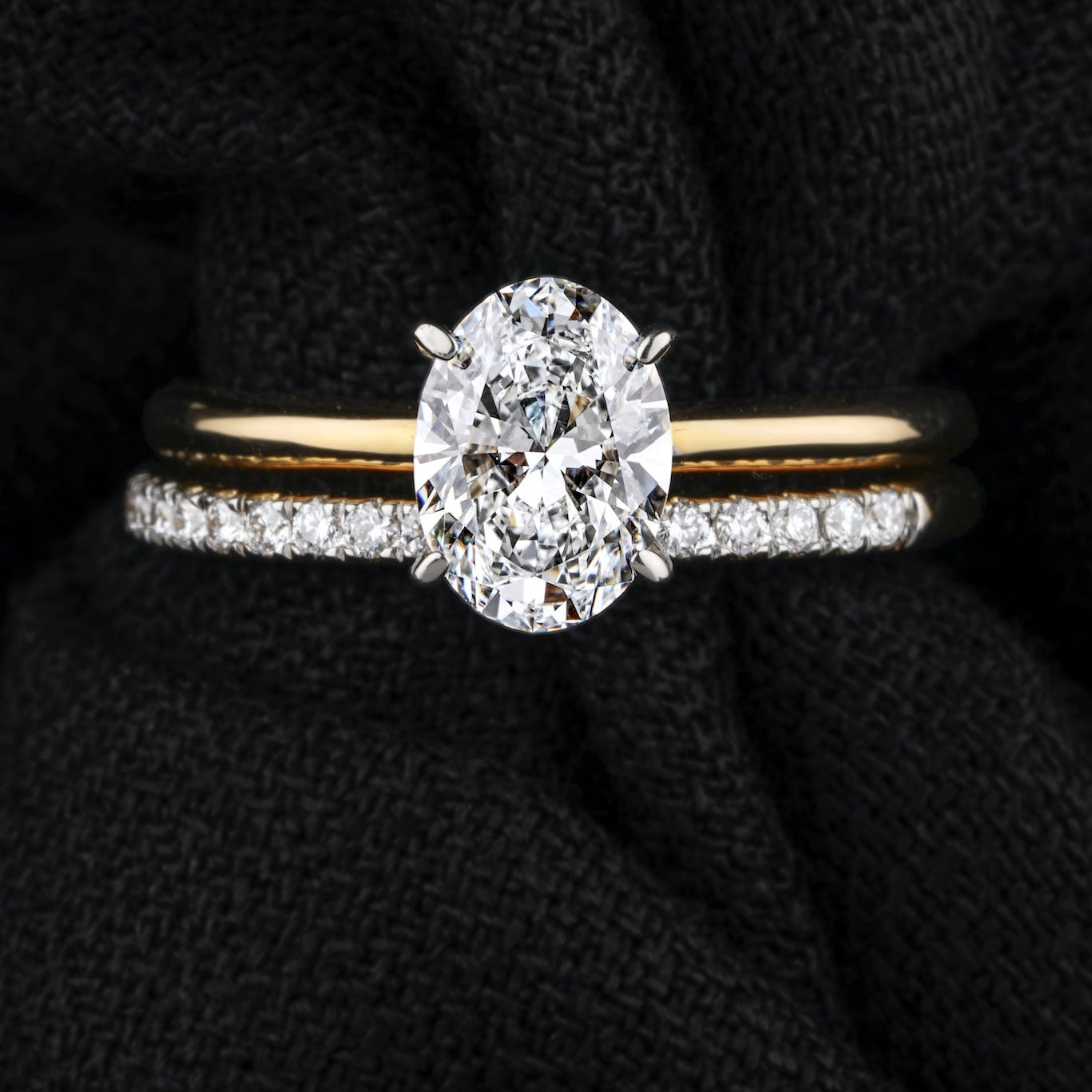
What is a lab grown diamond?
Whether mined from the earth or grown in a lab, diamond is crystallized carbon. It is the hardest of all minerals, but can chip or cleave if impacted with enough force. What makes diamonds so attractive is their high dispersion and refractive properties, which reflect, refract, and split the light into spectral colours. This gives diamonds their distinctive sparkle and fire.
Lab grown diamonds have the exact same chemical, physical, and optical properties of a mined diamond, just for a fraction of the cost.
How are diamonds valued?
Generally speaking, diamonds are priced using a price per carat (1 carat = 0.2 grams). The more rare and in demand the diamond is, the higher price per carat.
Larger diamonds, high colour or clarity, and rare fancy colours will command the highest price per carat.
For lab grown diamonds, the costs to produce the diamond play a larger role in the price per carat.
How are diamonds graded?
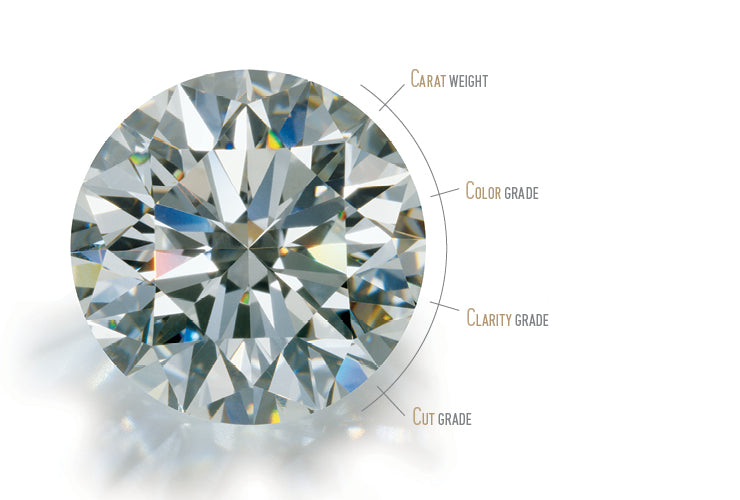
Diamonds, both mined and lab grown, are graded on the 4C's - carat, colour, clarity, and cut.
Carat
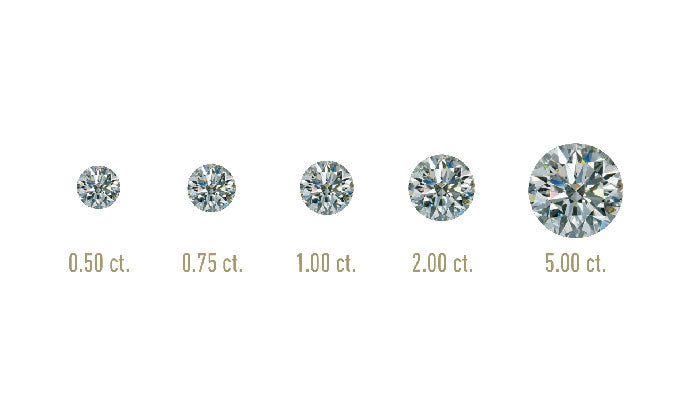
Diamonds are weighed and assigned a carat weight. One carat (denoted at 1ct) is 1/5th of a gram, or 0.2 grams. Generally speaking the larger the diamond, the more it will cost. Note that since carat is a measure of weight, some cuts, such as a cushion cut or emerald cut, will appear smaller than shallower cuts such as a round or oval cut, though they may have the same carat weight.
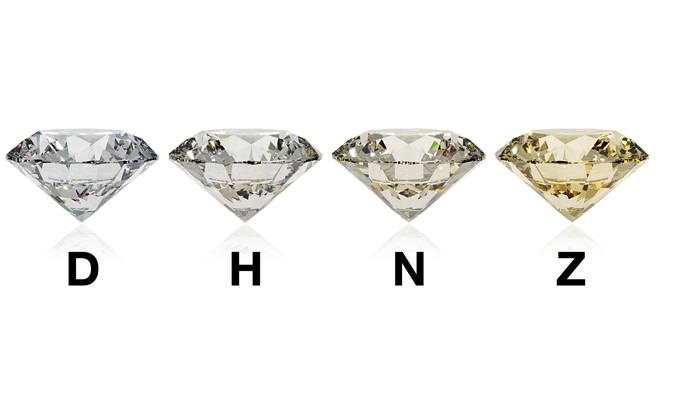
Colour
Colour is a measure of just that - the diamond's colour. For colourless to slightly tinted diamonds, an alphabetical grading scale is used. D is the brightest and most colourless grade, going down to a faint tint at the Z grade. These are not to be confused with fancy colour diamonds, which are more intense in colour and use a seperate grading system.
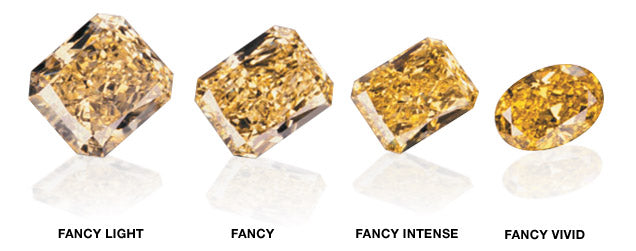
Fancy Colours
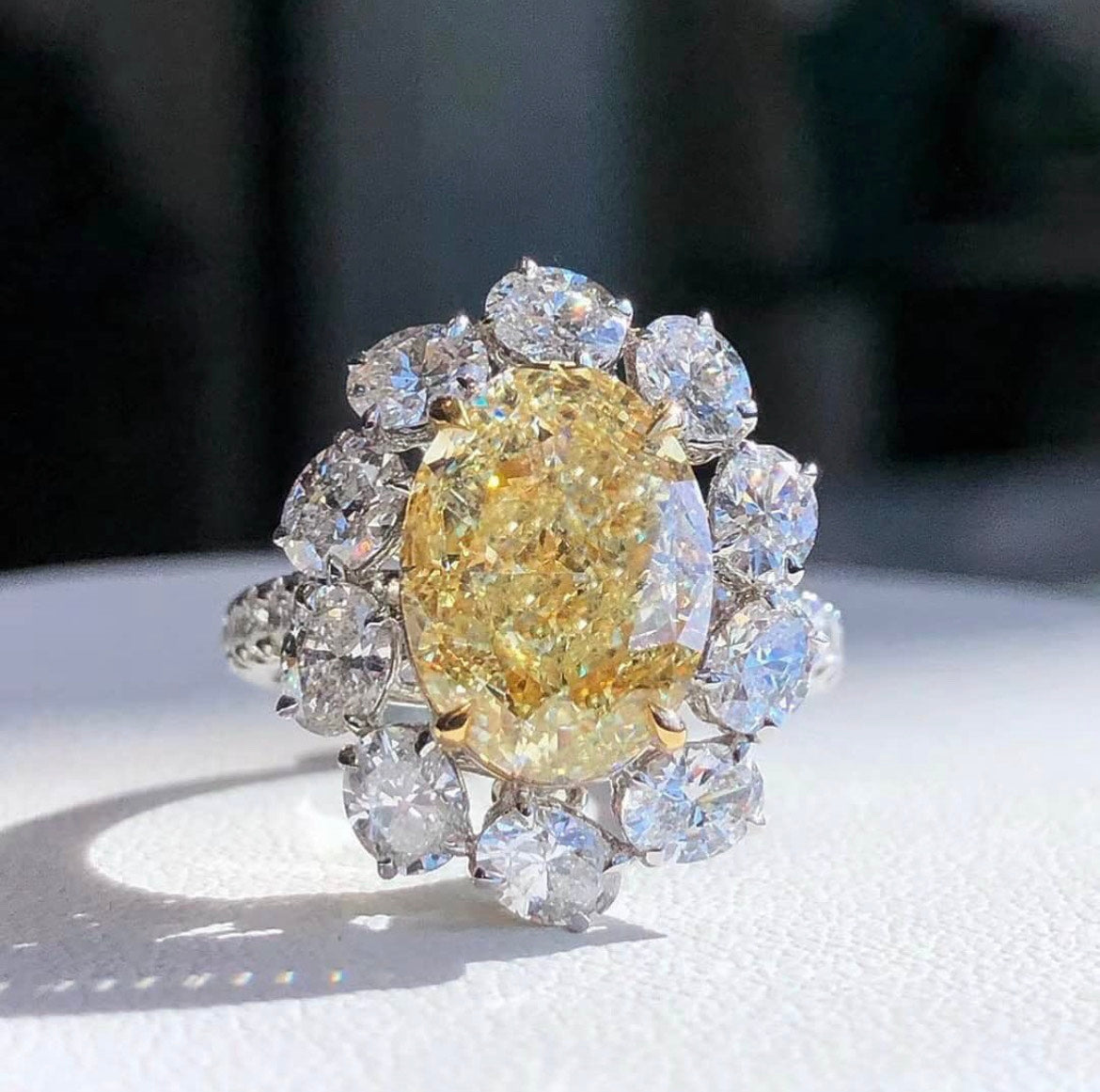
Fancy colour diamonds are diamonds, whether natural or synthetic, that are moderately to strongly a specific colour (rather than being colourless to near colourless). Their colour can be either natural (un-treated natural fancy colour diamonds), or coloured by a man-made process (lab grown diamonds and treated natural diamonds).
When it comes to natural, untreated fancy colour diamonds, common colours include black (opaque) diamonds, and brown to brownish diamonds. Moderately rare are the yellow or “canary” diamonds. On the higher end of rarity we find pink, purple, blue, green, and chameleon (colour change) diamonds. The rarest colour of all is red diamond, whose rarity can command values in the millions per carat.
Treated natural diamonds are usually lower grade D-Z or brownish natural diamonds that undergo HPHT (high pressure high temperature) and/or irradiation treatment to change their colours. The most common are yellow, brown, pink, and blue. Sometimes green is possible. Note that lab grown diamonds will often go through these processes to produce the same colours. While beautiful and affordable, it’s important to understand that the treatment process does not heavily reduce the value of the diamond, nor does it significantly improve its value either.
Fancy colour diamonds are graded using a more advanced system of grading than is used on D-Z diamonds. It looks at hue (i.e. yellow, brownish-yellow, yellowish-orange, etc), as well as tone and saturation (i.e. fancy dark, fancy deep, fancy vivid, fancy intense, etc). For more information, please click the link below:
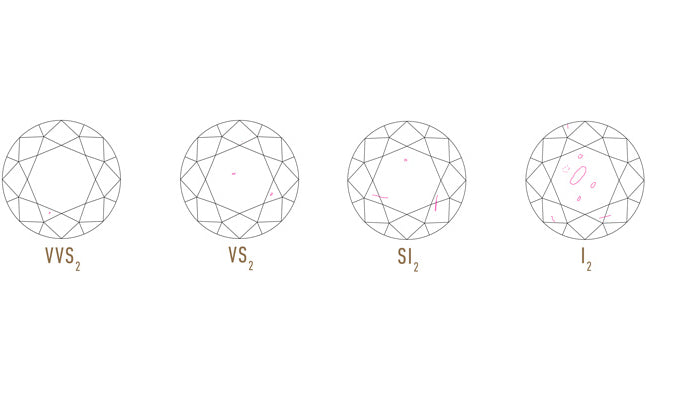
Clarity
Clarity is the measure of the inclusions or imperfections in the diamond. This can include other mineral inclusions, structural defects such as cracks (feather inclusions) or cloudy areas within the diamond. The higher the clarity grade, the higher the value of the diamond.
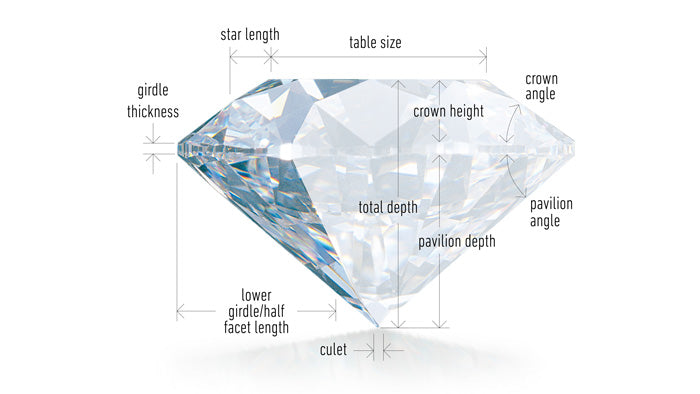
Cut
Not to be confused with the diamond's shape, the cut refers to the craftmanship of the facetting of the diamond. This looks at all of the angles and proportions, as well as the symmetry of the facets and the polish quality, and assigns a cut grade. Regardless of colour and clarity, it is the cut that determines the sparkle and fire of the diamond.
Note, however, that only standardized cuts (typically the round brilliant cut) have standardized proportions. As such, fancy shapes will not be assigned a cut grade by GIA or IGI, but will still have polish and symmetry gradings.